
Chain programs
like Lego.
Snap independent Solana programs into one atomic transaction. Each call's on-chain result flows straight into the next.
Sui does this natively. Solana couldn't. PTB-VM is the neutral substrate that brings it to the SVM, with a register file, result piping, and a hot-potato gate.
The swap makes 150 on-chain, the deposit receives 150. You never type 150.
How it works
A plan is a stack of bricks.
Each brick is one program call. Snap them in order and the runtime result of one feeds the next, held on-chain in a register file and never round-tripped through your client. The whole stack lands as a single atomic transaction.
Step. One program call. Its return value can be captured.
Register. Carries a runtime value from one step into the next.
Gate. Any obligation you open must be settled, or the whole tx reverts.


Sui chains call results natively.
Solana never could.
On Solana, top-level instructions run independently. There is no way to feed one step's runtime output into the next without your own program, so every team hardcodes its own router. PTB-VM does it once, for any program.
Recipes
Pre-built plans. One click.
A recipe is a plan someone already assembled for you. Connect a devnet wallet and run it.
Swap → Deposit
Swap an amount through an on-chain rate, then deposit exactly what came out into a vault. You enter 100; the swap produces 150 on-chain; the vault receives 150. You never type 150.
Token-2022 transfer → action
Move a Token-2022 asset, fees and hooks intact, as a plan step, then trigger a follow-up against the result. Token-2022 is a first-class brick with zero special-casing.
Borrow → use → settle
Open an obligation, use the borrowed value across unrelated programs, settle before the transaction ends. If the obligation isn't closed in-plan, the whole tx reverts.
Who it's for
Build the flow, not the plumbing.
Frontend-only teams
Compose multiple programs in one tx without deploying a router program of your own.
DeFi builders
Pipe a swap's real output into a deposit, atomically, instead of round-tripping the amount through your client.
Token-2022 issuers
Chain transfers with fees and hooks into multi-step flows. Token-2022 composes as a step.

Anatomy of a step
Every brick has the same studs.
The honest limit
This is the achievable subset, not full Sui PTB.
Solana needs every account a transaction touches listed upfront, so the runtime can schedule work in parallel. That rules out Sui's trick of deriving a brand new account mid-transaction and calling into it. PTB-VM pipes what Solana actually lets you pipe: u64 values and PDAs computed from data you already have.
What pipes
A step's u64 return value, and PDAs derived from known seeds. Enough for swap → deposit, borrow → settle, and Token-2022 flows.
What doesn't
Arbitrary runtime accounts a step invents on the fly. Those have to be known before the transaction is sent.

One signature. N programs. One atomic tx.
On-chain
Proven, not promised.
The core mechanic runs on devnet today: a swap's on-chain output piped into a vault deposit, in one transaction, with no router. v1 is a reference implementation. Signer delegation and typed registers are the v2 roadmap.
The builder
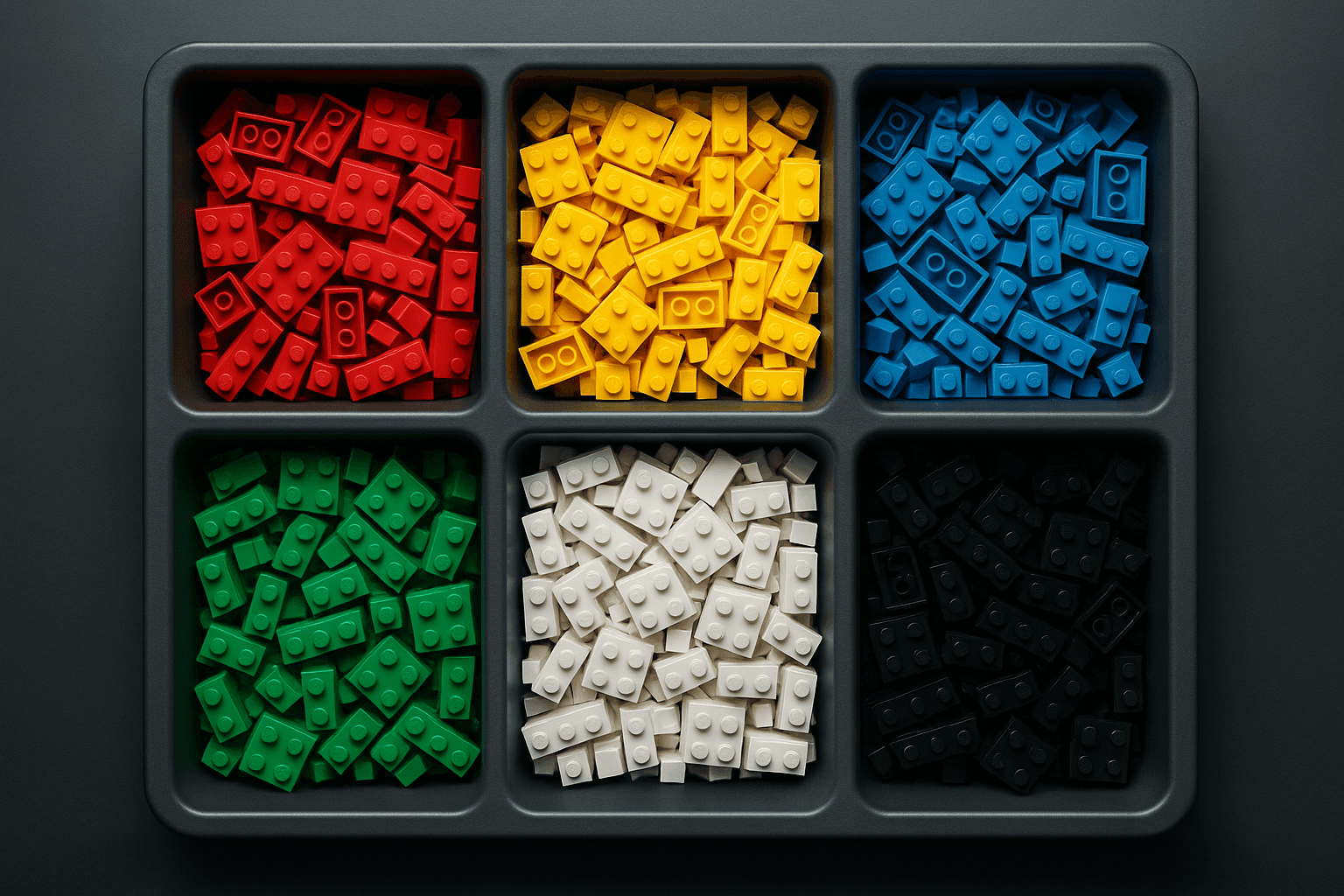
Open the bin.
Start snapping.
Assemble a plan in the 3D builder, or run a pre-built recipe with one click. Connect a devnet wallet and watch a multi-step transaction execute atomically.